By
By Best National Parks in India for Wildlife Lovers
Looking for real animal encounters, not just scenic views? This short guide is a wildlife-first, traveler-friendly list national parks that highlights where to go for tigers, rhinos, elephants, Himalayan species, and standout birding and marine experiences.
Why park status matters: a national park has stricter rules and stronger habitat protection, so sightings feel more meaningful when visitors follow rules and keep distance. Responsible visits help both animals and local communities.
The article groups choices by wildlife theme — big cats, rhinos and elephants, mountain species, and wetlands/mangroves/marine — so you can jump straight to what you love most. I’ll also share practical planning notes later on timing, permits, zones, and guides to turn inspiration into a trip.
Scale and confidence: as of 2025 there are 107 National Parks in India covering about 44,402.95 km², showing how vast and varied the protected network is. Read on to pick the best national park for your next wildlife adventure.
Why India’s National Parks Are a Wildlife Lover’s Dream Right Now
Improved management, legal backing, and flagship species programs make these protected places especially rewarding now.
A national park is an IUCN Category II protected area set aside to conserve whole ecosystems. That designation means stricter limits on development, clearer boundaries, and tighter visitor rules than a typical wildlife sanctuary. Visitors notice fewer roadworks, more regulated access, and habitat-focused planning.
Today the country counts 107 national park areas totaling about 44,402.95 km². That footprint—roughly 1.35% of the land—matters because larger, connected areas give species room to roam and reproduce.
Key legal steps bolstered these gains: the Wildlife Protection Act (1972) and Project Tiger (1973) set strong foundations for modern conservation and big-cat recovery. Conservation success also depends on visitors: stay on routes, follow guides, and avoid disturbance to help wildlife thrive.
Next step: choosing where to go should match habitat, season, and the species you most want to see.
National Parks in India: How This Wildlife-First List Was Chosen
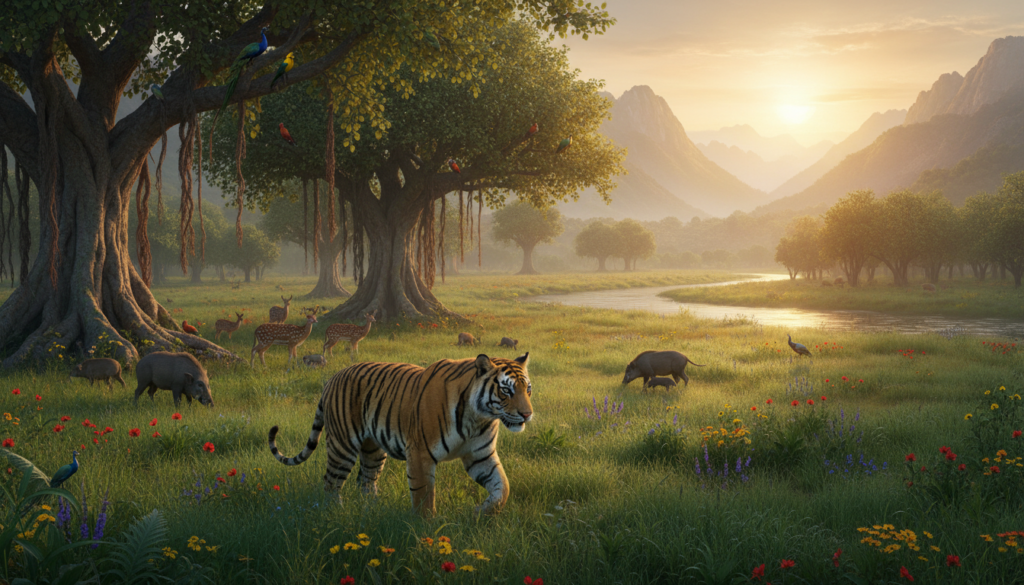
This guide favors places with the best odds for big sightings—tigers, rhinos, elephants, lions, and snow leopards—while staying realistic: animals move and sightings are never guaranteed. Use habitat and season to stack the odds in your favor when picking a trip.
Big-ticket wildlife sightings
Priority went to sites where headline species occur reliably. That doesn’t promise a sighting, but it points you to the best chances based on recent records and ranger reports.
Habitat variety
We chose areas that span mangroves, grasslands, rainforests, alpine zones, and cold desert. More habitats mean more species and different viewing styles for walkers, boats, and safaris.
Area and trip style
Large area landscapes like Hemis can feel wilder and need patience. Smaller core zones often deliver focused sightings quickly.
Recognition and conservation value
UNESCO world heritage listings—Kaziranga, Manas, Great Himalayan—signal high ecological value and stronger conservation measures. These badges matter for long-term protection.
Seasonality and responsible basics
Dry months can concentrate animals at water; cooler months make long days more comfortable. Always avoid baiting, playback, crowding, or pressuring drivers for photos.
How to use this list
Pick one or two target species, then match habitat, area, and season to those goals. That simple focus makes a trip both rewarding and respectful.
Big Cats and Iconic Safaris in Park India Travelers Ask For Most
The most common safari question is: where should I go for tigers? The honest answer is to pick a reserve with strong records, good guides, and realistic expectations—sightings help but are never guaranteed.
Jim Corbett National Park, Uttarakhand
Jim Corbett is a heritage destination and the oldest national park, established in 1936. It blends riverine forests and grasslands and remains a cornerstone for big-cat safaris and conservation-minded visits.
Kanha and Bandhavgarh
Kanha National offers broad central-India forests and steady wildlife viewing—ideal for first-timers. Bandhavgarh is famous among photographers because its tiger density can boost odds; still, zones and timing matter.
Ranthambore and Tadoba Andhari
Ranthambore pairs rugged forts and dramatic terrain with tiger tracking that feels cinematic. Tadoba Andhari—established 1955—is a high-energy option for tiger-focused drives; always prioritize ethical viewing over chasing.
Nagarhole (Rajiv Gandhi)
Nagarhole (Rajiv Gandhi) brings Kabini-fed biodiversity: even without a big-cat sighting, elephants, deer, and rich birdlife make drives rewarding.
Rhinos, Elephants, and River Landscapes in National Parks India Is Famous For
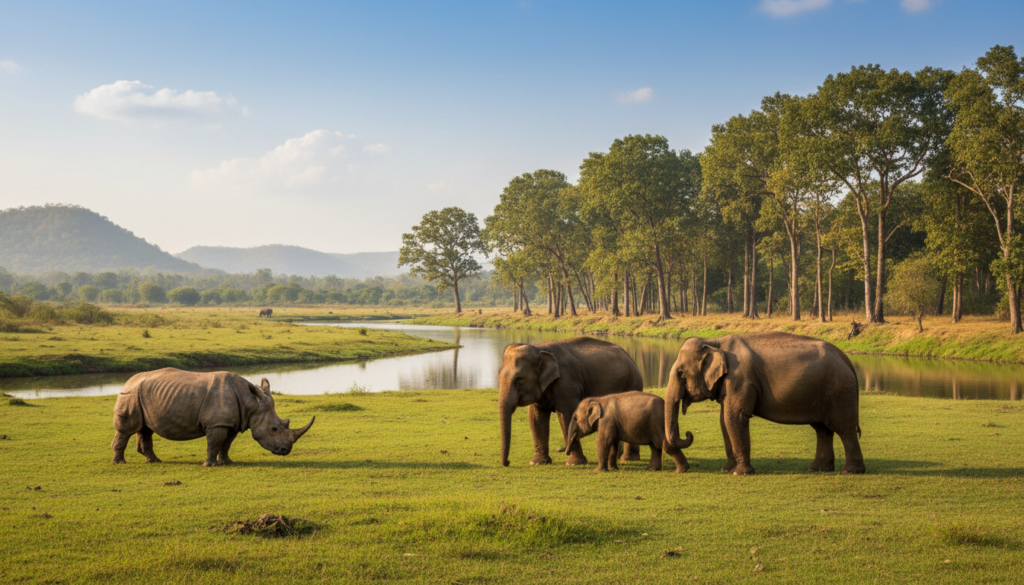
For travelers focused on one-horned rhinos and big herds of elephants, riverine grasslands and foothill forests offer a very different safari rhythm. These protected areas favor water, tall grass, and slow boat or jeep safaris that feel relaxed and immersive.
Kaziranga — rhino country
Kaziranga is a world heritage site and hosts the largest population of the Indian one-horned rhinoceros. Grassland and river channels make rhino-focused safaris especially rewarding.
Manas — foothill elephant reserve
Manas is also a world heritage area and an elephant reserve. Forests, river valleys, and foothill slopes create a different style of trip than dry deciduous tiger circuits.
Periyar, Dudhwa, and Valmiki
Periyar centers on a scenic lake where elephant sightings are common and the pace is calm compared with high-intensity drives.
Dudhwa (area ~490 km²) shows Terai grassland–forest mosaics that support many species and a distinct north-plain feel.
Valmiki (area ~335.65 km²) in Bihar offers offbeat foothill habitat and strong big‑mammal diversity for travelers who want an alternative route.
“Visit with patience: season changes river levels and viewability, and local entry rules vary by park.”
Practical tip: check seasonal access, hire an approved guide, and follow wildlife sanctuary rules to protect animals and communities.
Mountains, Snow Leopards, and the Largest National Park Adventures
The high Himalaya offers a different kind of wildlife trip: fewer quick drives, more hiking, and vast views where patience pays off.
Hemis National Park, Ladakh
Hemis National Park is the largest national park by area at about 3,350 km². It is a top snow leopard stronghold. Winter tracking needs local guides, patience, and strict ethical distance to avoid disturbance.
Great Himalayan National Park, Himachal Pradesh
The Great Himalayan is a recognized world heritage site. It focuses on alpine biodiversity and trekking routes. Expect hardy species and remote trails rather than easy vehicle safaris.
Valley of Flowers, Khangchendzonga & Pin Valley
Valley of Flowers (about 87.5 km²) is famed for seasonal blooms and dramatic scenery. Khangchendzonga covers roughly 1,784 km² and ranks among the largest protected areas by park size; altitude shapes access. Pin Valley (≈675 km²) shows cold desert landscapes and resilient mountain species.
Safety & sustainability: acclimatize, hire approved guides, and stay on marked trails to protect fragile terrain and local wildlife.
Birding, Wetlands, Mangroves, and Marine National Park Highlights
Coastal wetlands, mangrove labyrinths, and coral reefs offer wildlife scenes that move at boat speed rather than by jeep. These areas reward people who love dawn bird flights, slow boat rides, and careful snorkeling.
Sunderban
Sunderban is a tidal mangrove wilderness shaped by channels and tides. At about 1,330.1 km², this delta habitat feels unlike anywhere else and supports rare estuarine life.
Keoladeo Ghana
Keoladeo Ghana is a must for migratory birdwatching. Plan visits around winter migration to see the peak variety of waterfowl and waders.
Sultanpur
Sultanpur gained Ramsar recognition in 2021 and is an easy-access wetland stop for casual and serious birders alike. Wetlands like this matter because they concentrate food and resting areas for many species.
Marine National Park (Gulf of Kutch)
The marine national reserve on the Gulf of Kutch sits on coral reefs and includes 42 islands. Low-tide intertidal walks, reef viewing, and responsible turtle and dolphin watching are highlights here.
Mahatma Gandhi Marine
Mahatma Gandhi Marine offers island biodiversity and reef experiences on Andaman isles. Conservation-aware snorkeling and guided boat trips let travelers enjoy reefs while supporting local protection efforts.
Button Island
Button Island national sites—including tiny South Button (≈0.03 km²)—show how small islands can have outsized ecological value. These island national reserves underline that even pocket habitats hold world-class wildlife.
Tip: choose guides with local permits, respect tidal rules, and avoid crowding nesting areas to keep birds and marine life safe.
Make Your Wildlife Trip Count: Best Times, Permits, and Responsible Tourism
Your trip matters: choose dates, zones, and guides that respect wildlife and improve your odds for sightings. Visitor management across protected areas is rule-based—permits, zoning, and enforcement keep habitats safe and visits predictable.
Safari planning essentials
Permits can be limited and sold by zone. Book well in advance for high-demand park zones and peak months.
Hire authorized guides. They know routes, rules, and where patrols work best for ethical viewing.
When to go: sightings vs. scenery
For sightings-first trips, pick drier months when animals gather at water and visibility improves.
For scenery-first travel—blooms, cool weather, or quieter trails—visit during shoulder or wet seasons for greener landscapes.
Wildlife-first etiquette
Keep distance, stay quiet, and never feed animals. Don’t pressure drivers for close photos or off-route stops. These small choices protect species and habitats long term.
Practical tip: avoid flash at night, don’t block tracks, and never put a shot above animal welfare.
Quick picks by interest
Tigers: Corbett, Kanha, Bandhavgarh, Ranthambore, Tadoba, Nagarhole.
Rhinos: Kaziranga. Birds: Keoladeo, Sultanpur. Marine life: Marine National Park (Gulf of Kutch), Mahatma Gandhi Marine. Himalayan wildlife: Hemis, Great Himalayan NP.
Final note: every park and sanctuary is a living area for species. Responsible planning and simple rules keep these places thriving for future visits and for local conservation efforts.
Your Next Wild Escape Into India’s Parks Starts Here
Plan your next trip by matching the species you dream of seeing with the right habitat and season.
Start with a short checklist: pick a target species, choose the best season, shortlist two to three national park options, then book permits and an approved guide early.
Remember the india first conservation story: the first protected area began with Corbett in 1936 and later laws expanded land set aside for wildlife. Today these areas help safeguard species and local communities.
Mix experiences for a richer trip—pair a tiger-focused park with a birding wetland, or combine a rainforest visit with a marine reserve. For stretch trips, consider Blue Mountain (Phawngpui) or the Salim Ali City Forest for fresh perspectives.
Final note: follow speed limits, stay quiet, and remain inside permitted zones. Small acts of respect keep habitats healthy and sightings meaningful for everyone.