By
By Explore the Iconic 7 Wonders of the World
The 7 wonders of the world represent the most remarkable achievements in human history, showcasing architectural brilliance and cultural significance across different civilizations.
These magnificent monuments were chosen through a global voting campaign, highlighting their importance and appeal to people worldwide. The list includes The Great Wall of China, Petra, The Colosseum, Chichen Itza, Machu, Picchu, The Taj Mahal, and Christ the Redeemer.
Understanding these seven wonders provides insight into the historical and cultural context of these incredible structures, and how they differ from the original ancient list, with only the Great Pyramid of Giza remaining today.
Key Takeaways
- The 7 wonders of the world are a testament to human architectural achievement.
- These monuments were selected through a global voting campaign.
- Each wonder has significant historical and cultural importance.
- The list includes structures from different civilizations and time periods.
- The modern seven wonders differ from the original ancient list.
The History and Significance of the 7 Wonders of the World
In 2000, a significant campaign was launched to redefine the Seven Wonders of the World for the modern era. The original list, compiled in the 2nd century BCE, had only one surviving structure—the Great Pyramid of Giza. This campaign, initiated by the Swiss-based New7Wonders Foundation, sought to create a new list through global public voting.
More than 100 million people participated in the selection process, casting their votes online or via text messaging. The final list was announced in 2007, featuring monuments that are not only remarkable feats of engineering and architecture but also UNESCO World Heritage sites. These structures represent diverse civilizations and historical periods, showcasing humanity’s greatest achievements across centuries.
- The concept of “wonders of the world” originated with ancient Greek travelers documenting remarkable structures.
- The original Seven Wonders list was compiled in the 2nd century BCE, with the Great Pyramid of Giza being the sole survivor.
- The New7Wonders campaign updated this list for the modern era.
The significance of these wonders of the world lies in their representation of human history and culture. They are a testament to the ingenuity and creativity of our ancestors, continuing to inspire wonder and awe today.
The Great Wall of China: An Engineering Marvel
As one of the world’s largest building-construction projects, the Great Wall of China is a marvel that continues to fascinate. Spanning approximately 13,170 miles with its branches and extensions, it is a testament to the ingenuity and labor of ancient civilizations.

The construction of the wall began in the 7th century BCE and continued for over two millennia, with the most iconic sections built during the Ming dynasty. The wall’s structure is not just a single barrier; it features two parallel walls in many sections, accompanied by watchtowers and barracks.
- The Great Wall of China is an engineering feat that stretches across diverse terrains, including mountains, deserts, and plains.
- Its original purpose was to serve as a defensive barrier against northern invaders, though it is noted more for its symbolic significance than military effectiveness.
Built using ancient construction techniques, the Great Wall is a remarkable example of human determination and engineering prowess, earning its place among the seven wonders of the world.
Petra: The Rose City Carved in Stone
Nestled among the sandstone mountains and cliffs of Jordan, the ancient city of Petra stands as a testament to the ingenuity of the Nabataeans. This site was purported to be one of the places where Moses struck a rock and water gushed forth. The Nabataeans, an Arab tribe, made it their capital around the 4th century BCE and transformed it into a thriving trade center.
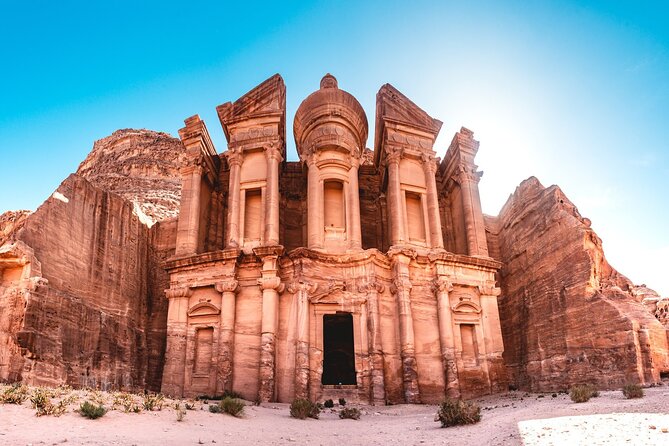
The Nabataeans were skilled carvers who chiseled dwellings, temples, and tombs into the sandstone, creating a unique structure that changed color with the shifting sun. They also constructed a sophisticated water management system, allowing for lush gardens and farming in the desert city. At its peak, Petra had a population of approximately 30,000.
Petra’s decline began as trade routes shifted, and it was further devastated by earthquakes. Despite being rediscovered in the 20th century, many questions remain about this ancient wonder.
The Colosseum: Rome’s Iconic Amphitheater
Rome’s Colosseum, an engineering marvel of the ancient world, was built under the orders of Emperor Vespasian. This massive structure, constructed in the 1st century, measures 620 by 513 feet and features a complex system of vaults, showcasing innovative Roman architecture and the use of concrete.

The Colosseum, considered the largest amphitheater ever built, was capable of holding between 50,000 to 80,000 spectators. It hosted various events, including gladiatorial contests, animal hunts, and even mock naval battles. As one of the world‘s most recognizable monuments, it symbolizes Imperial Rome’s power and engineering prowess.
Despite facing numerous challenges over nearly 2,000 years, the Colosseum continues to attract millions of visitors, making it one of the most visited archaeological sites globally.
Chichen Itza: Mayan Astronomical Brilliance
Located on the Yucatán Peninsula, Chichen Itza is a testament to the Mayans’ architectural and astronomical prowess. This pre-Columbian city, which flourished between the 9th and 10th centuries CE, was built by the Maya civilization under the influence of the Toltecs.
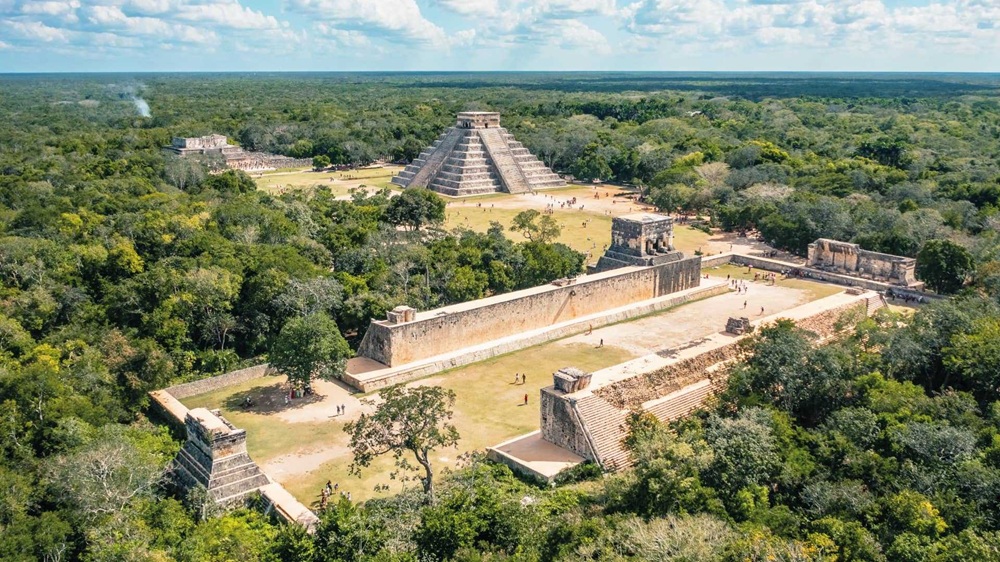
The city’s most famous structure, El Castillo, also known as the Temple of Kukulcan, is a step pyramid that stands as a testament to the Mayans’ sophisticated understanding of astronomy and mathematics. With 365 steps, one for each day of the year, it creates a serpent-like shadow effect during the spring and autumn equinoxes.
- Chichen Itza served as a major regional center for religious, political, and economic activities.
- The city is home to the largest tlachtli (a type of sporting field) in the Americas, known as the Great Ball Court.
- Other notable structures include the Temple of the Warriors, the Observatory (El Caracol), and the Sacred Cenote.
Chichen Itza was a significant city in time for the Mayan civilization, reflecting their advanced knowledge and cultural practices.
Machu Picchu: The Lost City of the Incas
High above the Urubamba Valley, Machu Picchu stands as a mysterious and breathtaking sight. This 15th-century Inca citadel, nestled in the Andes mountains of Peru, was “discovered” in 1911 by American explorer Hiram Bingham.

The purpose of Machu Picchu has long been a subject of debate among scholars. While Bingham believed it was Vilcabamba, a secret Inca stronghold, others propose that it was a pilgrimage site or a royal retreat. Despite the uncertainty, it is clear that Machu Picchu is one of the few major pre-Columbian ruins found nearly intact.
- The city features sophisticated agricultural terraces, plazas, residential areas, and temples.
- Machu Picchu’s dry-stone construction techniques have withstood century-old earthquakes without mortar.
- Recognized as a UNESCO World Heritage site in 1983, efforts are ongoing to protect this fragile archaeological treasure.
Machu Picchu’s allure lies in its mystique and architectural brilliance. As one of the most well-preserved pre-Columbian ruins, it continues to captivate visitors from around the world, including those from others countries like India.
The Taj Mahal: A Monument of Eternal Love
The Taj Mahal, a majestic monument in Agra, India, stands as a testament to eternal love. Commissioned by Emperor Shah Jahān in memory of his beloved wife Mumtāz Maḥal, who passed away in 1631, this magnificent structure is a blend of beauty and architectural brilliance.

The construction of the Taj Mahal took approximately 22 years and required the labor of 20,000 workers. This monument is renowned for its perfect symmetry and exquisite details, including its iconic central dome surrounded by four smaller domes. The Taj Mahal is made of white marble featuring semiprecious stones in geometric and floral patterns.
The complex includes beautiful gardens designed according to Persian charbagh principles, with a reflecting pool that mirrors the mausoleum’s image. As a masterpiece of architecture, the Taj Mahal continues to captivate millions, symbolizing eternal love and beauty.
Christ the Redeemer: Brazil’s Art Deco Masterpiece
Towering over Rio de Janeiro, Christ the Redeemer is an Art Deco masterpiece and a symbol of Christianity. This colossal statue of Jesus stands atop Mount Corcovado, which is about 2,300 feet high.
The statue’s origins date back to just after World War I, when Brazilian Catholics sought to create a powerful religious symbol in response to growing secularism. Designed by Heitor da Silva Costa, Carlos Oswald, and Paul Landowski, the statue took five years to complete, from 1926 to 1931.

The resulting monument stands 98 feet (30 meters) tall, with its outstretched arms spanning 92 feet (28 meters). Made of reinforced concrete and covered in approximately six million soapstone tiles, it is the largest Art Deco sculpture in the world. Despite its grandeur, the statue has faced maintenance challenges, including frequent lightning strikes that have damaged portions of the sculpture.
Why These 7 Wonders Continue to Captivate the World
Across centuries, the 7 Wonders of the World have captivated human imagination, symbolizing the best of human creativity. These monuments represent humanity’s greatest architectural and engineering achievements from different time periods and civilizations.
The Great Wall of China and the Taj Mahal are testaments to human ingenuity, while the Great Pyramid of Giza remains an iconic wonder. Recognized as UNESCO World Heritage sites, these wonders continue to inspire modern architecture and engineering.
These seven sites connect us to ancient civilizations, helping us appreciate the ingenuity and artistic vision of our ancestors. Ongoing conservation efforts protect these treasures for future generations.