By
By Landour, Mussoorie: Uncover the Enchanting Hill Town in Uttarakhand
Landour Mussoorie offers a quieter hill town experience within the larger tourist circuit. This small place feels frozen in time, with misty lanes, colonial cottages, and a relaxed pace that rewards slow walking.
This guide exists because many treat the hamlet as a quick add-on. Spend one unhurried day here and you will see why repeat visitors return over the years.
You will find a walkable route, cozy cafes, peaceful viewpoints, and small churches. Practical tips will help you plan your trip today without stress.
Expect calm, simple routes, and views that make time feel longer. If you want an ultimate guide for India-based travelers seeking depth over lists, this guide is for you.
Why Landour Feels Like a Town Frozen in Time
A quieter military past gives this hill town its measured, old-world rhythm. The original landour cantonment layout still guides streets and property limits, so lanes remain narrow and houses sit back under shade.
Roots in a British-era cantonment
The cantonment was set up as a sanatorium and army hospital. That history shaped the town plan, the modest scale of buildings, and a regulated feel that limits heavy change.
Colonial character on the ground
Visitors note old cottages, heritage facades, and a sleepy residential rhythm. Many homes look as they did decades ago, with people keeping a low profile and life moving slowly.
Forest, fog, and quiet rules
Restrictions on new commercial construction preserve calm. Deodar and oak arch over lanes, chir pine dots the slopes, and mist turns a simple walk into a cinematic stroll.
Behavior cue: walk softly, photograph respectfully, and let the trees, fog, and old houses lead your visit. The change is obvious as soon as you enter this cantonment town: fewer signboards, fewer loud markets, more serenity.
Landour Mussoorie at a Glance: Location, Altitude, and What to Expect
A short climb from the town center leads to a calmer, higher neighborhood best experienced on foot. Landour Mussoorie sits within the wider hill district but feels distinct because of elevation, cantonment rules, and narrow lanes.
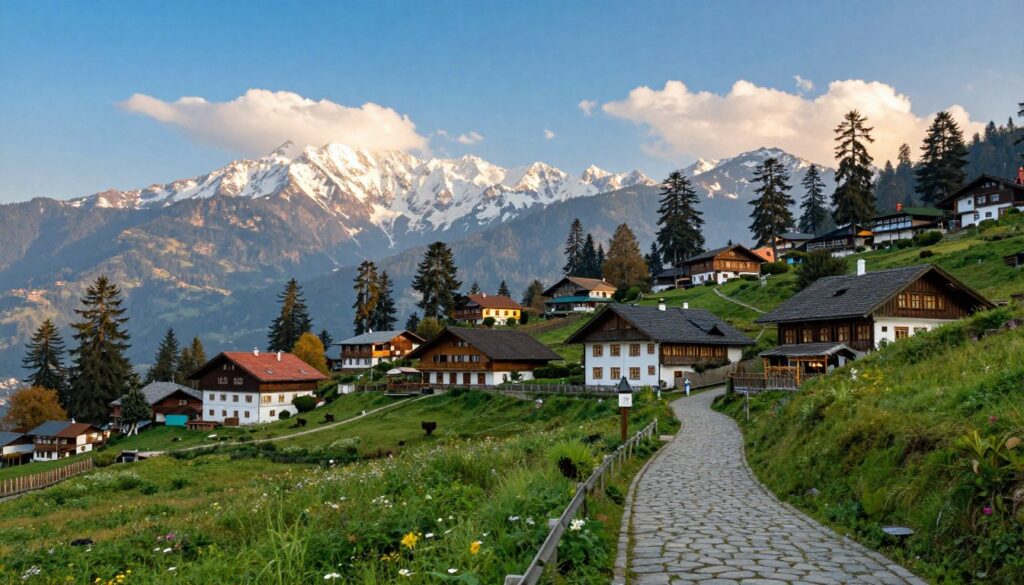
The practical numbers matter: the Library Bus Stand is about 7.5 km away. The area rises roughly 984 ft above the main town, so the climb is brief in distance but slower in travel time.
Steep roads, narrow lanes, and pace
The road is steep and often narrow. Even short stretches can take longer than a flat map suggests. Cars slow down, and congestion on small streets is common.
How to reach and how to plan your time
You can reach Landour by a short taxi ride, a two-wheeler, or an uphill walk for those who prefer to move by foot. Travelers arriving from the station or airport should budget extra minutes for the climb and local traffic.
“Plan several hours for viewpoints, cafes, and a relaxed walk — this place rewards lingering more than rushing.”
For a calm day trip, set aside at least half a day. Prioritize walking segments and leave buffer time for narrow lanes, tea stops, and quiet viewpoints.
A Walkable Trail Through the Best Places to Visit in Mussoorie Landour
Use the Clock Tower as your compass, then follow a tidy loop that shows why this hill area rewards walking. Start at the rebuilt Clock Tower (original 1938, demolished 2010, rebuilt 2016) and check the nearby Mussoorie Heritage Center for quick historical context.
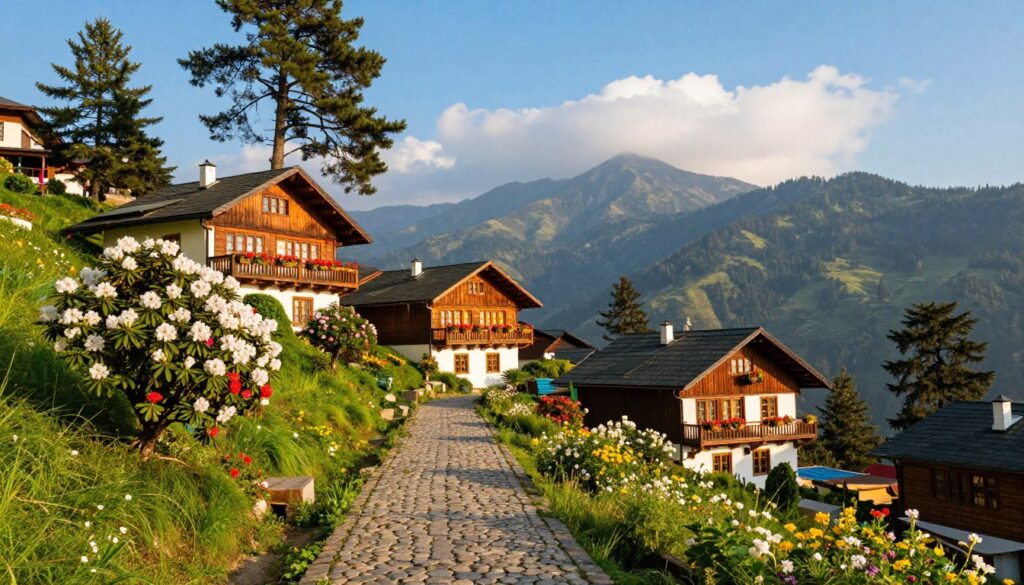
From Bazaar and Mullingar to the Four Shops
Head to the bazaar and Mullingar Hill. Mullingar, built in 1825, offers early viewpoints where the first “wow” views arrive with little effort.
Pause at Char Dukan—the classic four shops cluster—for warm tea and snacks. This is the place to feel the town’s unhurried rhythm.
Churches, Language School, and Quiet Lanes
Visit St. Paul Church (1839–40) to see stained glass and a restored interior in a calm atmosphere. Then walk to Kellogg Memorial Church (1903), tied to the Landour Language School and local history beyond just photos.
Sisters Bazaar follows next: quiet lanes, heritage hotels, and vintage streets that read more like lived-in neighborhoods than tourist sets.
Shops, Bakes, Cafes, and the High Point
Stop at Prakash’s Store for peanut butter, jams, cheese, and postcards before enjoying British-style bakes at the Landour Bakehouse, a foodie and bookish stop thanks to its cookbook legacy.
For a slower meal, detour to Cafe Ivy for curated ambiance or Doma’s Inn for Tibetan food.
End with Lal Tibba and a Note on Ruskin Bond
Finish at Lal Tibba, the highest point, famed for Himalayan views and the Winter Line sunset (elevations commonly cited around 7,464–7,770 ft). It’s a perfect place to close the loop.
Respect local privacy: the area is linked with Ruskin Bond, but please avoid disturbing private residences or treating the neighborhood like a spectacle.
Food, Tea, and Cafe-Hopping in Landour
Eating here feels like a slow ritual: small plates, hot cups, and long conversations set the pace. Plan your stops so meals become part of the walk, not an interruption.
Char Dukan: pancakes, Maggi, and chai breaks
Char Dukan is the go-to for quick hill comfort. Order pancakes for a sweet treat, Maggi for warmth, and a steaming cup of chai to revive your legs.
These are perfect between viewpoints or as a late-morning snack on your walking loop.
Landour Bakehouse and the old-hills mood
Landour Bakehouse champions a talk-more, scroll-less vibe with British-style bakes and a deliberate “no WiFi” message.
It’s a place to slow down, share a loaf, and enjoy a low-key rhythm that fits the neighborhood.
Where to plan a slow meal: Cafe Ivy or Doma’s Inn
Pick Cafe Ivy for a curated, design-forward sit-down and relaxed service.
Choose Doma’s Inn when you want Tibetan flavors, colorful plates, and a lively, photo-friendly meal.
Tip: peak hours fill quickly; expect short waits. Book your slow meal after a viewpoint or early in the loop to avoid crowding.
Nature, Views, and Wildlife Around Landour’s Hills
The hills around this cantonment serve up sudden vistas that shift from cloud-wrapped valleys to crisp Himalayan horizons. Weather and light change fast, so a short walk can feel like several different scenes in one outing.
Signature viewpoints and timing
Lal Tibba is the payoff point for many visitors. Time your visit for late afternoon light to catch long shadows and clearer horizon lines after the day warms.
Trees to spot on every walk
Keep a checklist on your phone: deodar, rhododendron, blue pine, and West Himalayan fir. These trees frame lanes, add color in spring and monsoon, and make casual tree-spotting a simple, guided nature activity.
Wildlife spotting basics
Start by looking up: raptors and pheasants are the most likely encounters. The area hosts rich birdlife—over 350 species recorded—so binoculars help.
Occasional sightings of larger mammals such as jackal, barking deer, goral, or sloth bear do occur, but they are rare. Always stay on paths, keep noise low, and never feed wildlife.
Safety note: avoid solo forest walks at dusk. Plan routes so you return to populated lanes before dark and carry a charged phone and simple torch.
Trip Planning Essentials: Best Time, How to Reach Landour, and Getting Around
Plan your visit around seasons and transport so a single day here feels relaxed, not rushed. Pick a season that matches the experience you want, then allow extra travel time on steep, narrow roads.
Best time to visit
Summer offers cool, comfortable weather and easier walking—ideal for a full day of viewpoints and cafes.
Monsoon (July–September) brings the signature mist and dramatic forest moods; pack waterproofs and expect slippery steps.
Winter rewards early risers with the Winter Line sunset near Lal Tibba; bring warm layers for cold evenings at higher time of day.
How to reach via Dehradun
Fly into Jolly Grant (Dehradun) — about 60 km by road — then take a taxi to the hill area.
If you arrive by train, Dehradun station sits roughly 35 km away; shared taxis and buses connect to the town below.
Road travel from Dehradun is common but can be slow; build buffer minutes into your itinerary for the climb.
Getting around smartly
Walking is the best way to see the core loop and quiet lanes. It reveals small shops and viewpoints you would miss by car.
Rent a scooter or bike for short hops between points if you prefer speed. Avoid bringing a car into narrow stretches—parking and jams are frequent.
Where to stay
For heritage charm and quiet mornings, pick a local heritage-style hotel in the cantonment area. Rooms are limited, so book early.
If you want more inventory and convenience, choose hotels in the larger town and plan a day trip uphill.
Packing note: rain layers for monsoon, sun protection for summer walks, and warm outerwear for winter evenings.
Make Your Landour Day Trip One You’ll Want to Repeat
Plan the kind of slow day that invites you back: start after brunch, walk the core loop at an easy pace, pause for tea and a bakery break, and time Lal Tibba for sunset to make the trip memorable.
This place rewards repetition because the mood—mist, trees, and heritage lanes—remains soothing each visit. Treat the town as a spot to linger, not a list to finish.
Choose depth over speed. Do fewer stops well and you will remember more. Pick a style for your return: heritage-first (churches and bazaars), cafe-first (Bakehouse, Ivy, Doma’s), or view-first (Lal Tibba and nearby viewpoints).
Small planning nudge: save this route, pick the season that fits the time you want—misty, sunny, or Winter Line—and fold Landour into your Mussoorie itinerary with intention.