By
By Major Festivals in India
India is a vibrant country known for its rich culture and diverse traditions. The land is home to numerous festivals that are deeply rooted in mythology, religion, and cultural heritage.
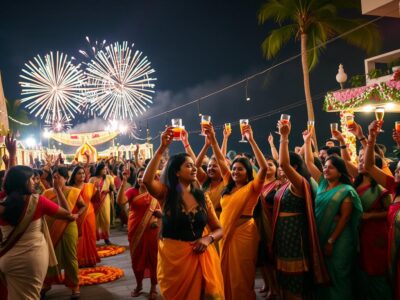
These celebrations are a testament to the diversity of life in India, with each state having its unique language, dialect, and cultural practices. Indian festivals are celebrated with a kaleidoscope of colors, lights, decorations, dance, music, and delicious food, reflecting the country’s values and way of life.
Throughout the year, India hosts a wide range of festivals, offering visitors a chance to experience the rich cultural tapestry of the world‘s largest democracy.
Key Takeaways
- India is known for its diverse cultures and traditions.
- Indian festivals are deeply rooted in mythology and cultural heritage.
- Festivals in India are celebrated with vibrant colors, lights, and music.
- The country’s festivals reflect its values and way of life.
- India hosts a wide range of festivals throughout the year.
The Cultural Tapestry of Indian Festivals
Festivals in India are a kaleidoscope of colors, sounds, and emotions, showcasing the country’s rich cultural diversity. The festivals India celebrates are not just days of revelry but are deeply rooted in the country’s heritage and traditions.
On any given day, various parts of the country are celebrating different festivals with great fervor. This diversity is a hallmark of Indian culture, where people from all walks of life come together to participate in the celebration. Whether it’s a religious festival or a harvest festival, the essence of community and togetherness is always at the forefront.
The significance of these festivals is often tied to mythological stories and historical events, making each day of celebration meaningful. People dress up in their finest clothes and jewelry, adding to the vibrancy of the festivals. The preparations involve elaborate rituals, from cleaning and decorating homes to preparing special foods, reflecting the importance of these festivals in Indian culture.
Indian festivals are celebrated with great enthusiasm across different places, each adding its unique flavor to the celebration. This blend of traditions and customs makes India’s cultural tapestry rich and diverse.
Major Festivals in India: A Year-Round Calendar
India’s festival calendar is a vibrant tapestry, woven with celebrations that span the entire year. Each festival in India is celebrated wonderfully with a mix of lights, colors, decorations, dance, music, and mouth-watering food.
All major festivals are celebrated on a grand level in India. At some of the festivals, you will find the streets full of people dancing, singing, and celebrating. The Indian festival calendar follows multiple systems, including the Gregorian calendar, various regional lunar calendars, and religious calendars, creating a complex but rich festive schedule.

A comprehensive month-by-month overview reveals that barely a month passes without a significant festival. Seasonal changes influence the festival calendar, with harvest festivals marking agricultural cycles and other celebrations coinciding with specific astronomical events.
- The geographical distribution of festivals throughout India is noteworthy, with different regions known for particular celebrations.
- Some festivals have fixed dates on the Gregorian calendar, while others follow lunar calendars, causing their dates to shift each year.
- The festival calendar reflects India’s agricultural heritage, with many celebrations tied to planting and harvest seasons.
Modern festival tourism has adapted to this calendar, with travel companies offering specialized tours around major festival dates. This has made it easier for visitors to experience the diverse cultural landscape of India throughout the year in various places.
Diwali: The Festival of Lights

Diwali, a festival deeply rooted in Indian culture, is a time for family, friends, and festivities. Celebrated in the month of Kartik according to the Hindu calendar, Diwali is observed with great fervor across India and is known as the Festival of Lights.
The mythology behind Diwali is rich and symbolic. It commemorates the return of Lord Rama to Ayodhya after a 14-year exile, marking his victory over the demon king Ravana. This triumph of good over evil is a central theme of Diwali celebrations.
Preparations for Diwali are elaborate, involving thorough house cleaning and renovations. Homes are decorated with diyas (oil lamps), candles, and colorful rangoli designs to welcome Goddess Lakshmi, the goddess of wealth and prosperity.
The religious rituals of Diwali include the worship of Goddess Lakshmi and Lord Ganesha, the remover of obstacles. People wear new clothes and exchange gifts with family and friends, adding to the festive spirit.
Diwali celebrations vary across regions in India. While North India celebrates with grand festivities, the South observes the festival with more subdued rituals. The visual spectacle of Diwali night is breathtaking, with millions of lights illuminating homes, streets, and public buildings, complemented by fireworks displays.
The day of Diwali is also a time for sweets and savory dishes, prepared with love and shared with loved ones. The festival has significant economic importance, marking a time for new purchases, business dealings, and the beginning of a new financial year for many traditional businesses.
As the celebration comes to a close, people reflect on the values of Diwali: the triumph of light over darkness and good over evil. It’s a time for renewal and joy, filling homes with warmth and lights.
Holi: The Vibrant Celebration of Colors
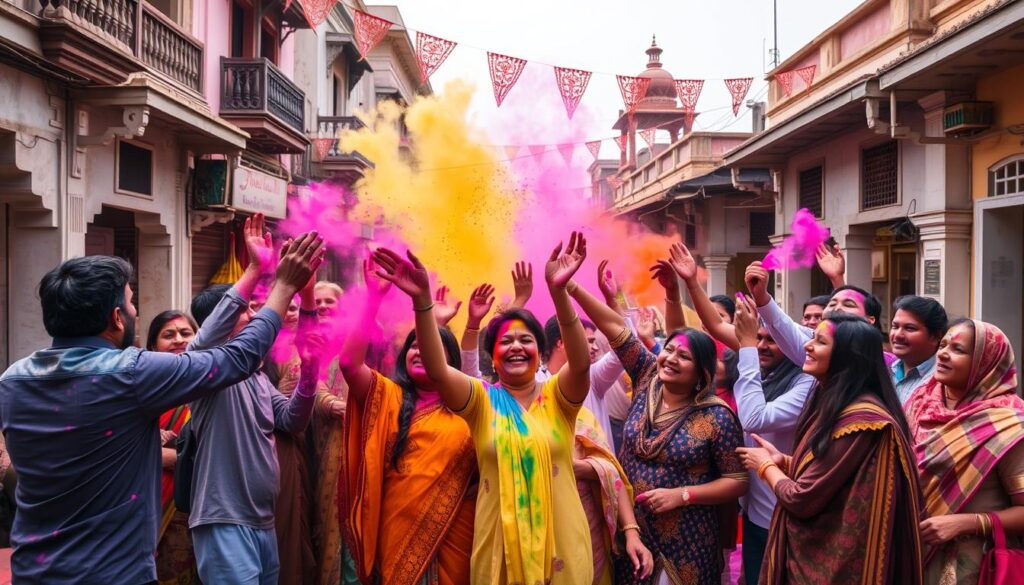
As the winter chill dissipates, India erupts in a riot of colors during the Holi festival. This vibrant celebration is not just about throwing colored powders and waters; it’s a day of music, dance, and revelry that brings people together, breaking down social barriers.
The mythology behind Holi is rooted in the story of Prahlad and Holika, symbolizing the triumph of devotion and good over evil. This legend is commemorated through the Holika Dahan ritual, where a bonfire is lit a day before Holi, signifying the victory of good over evil.
On the day of Holi, people gather in streets and open spaces to play with colored powders and water, dancing to the rhythm of folk music. The air is filled with laughter and joy as people of all ages participate, wearing white clothes that soon become a canvas of colors.
The celebration is also associated with special foods and drinks, such as gujiya, thandai, and dahi bhalla. These traditional delicacies add to the festive spirit, making Holi a truly sensory experience.
Holi is celebrated with regional variations across India. For instance, the Lathmar Holi in Barsana is famous for women playfully beating men with sticks, while Vrindavan and Mathura host week-long celebrations that are a treat to witness.
The festival temporarily dissolves social hierarchies, allowing people from different backgrounds to come together in a spirit of joy and camaraderie. As spring arrives, Holi marks the end of winter, reflecting themes of renewal and rejuvenation.
Today, Holi has gained international recognition, with color run events and Holi festivals being celebrated in many countries around the world. This global celebration is a testament to the universal appeal of Holi’s message of love, joy, and togetherness.
Durga Puja and Navratri: Honoring the Divine Feminine

Goddess Durga’s victory over the demon Mahishasura is commemorated during the Durga Puja and Navratri festivals. These nine-day celebrations are a testament to the power of the divine feminine and the triumph of good over evil.
The mythology behind Durga Puja and Navratri is rooted in the story of Goddess Durga’s victory. During the nine days, devotees worship nine forms of Goddess Durga, each representing different attributes and powers.
The festivals are celebrated differently across regions. In West Bengal, Durga Puja is celebrated with elaborate pandals housing magnificent Durga idols, while in Gujarat and North India, Navratri is marked with energetic Garba and Dandiya Raas dances.
The artistic elements of Durga Puja are noteworthy, with intricate clay idols and decorated pandals featuring themes ranging from traditional to contemporary. The celebrations are accompanied by cultural performances, adding to the festive atmosphere.
In North India, Navratri is observed with fasting for seven to eight days, concluding on the eighth or ninth day. In contrast, Durga Puja in Bengal is a time for feasting, with devotees enjoying delicious sweets and savories.
Both festivals have a strong community aspect, with people coming together to organize and participate in the celebrations. The grand finales of both festivals are emotionally significant, with the immersion of Durga idols in water bodies in Bengal and the celebration of Vijayadashami or Dussehra marking the end of Navratri.
The celebration of Durga Puja and Navratri is a vibrant expression of India’s rich cultural heritage, showcasing the country’s diversity and the significance of the divine feminine.
Ganesh Chaturthi: Celebrating the Elephant-Headed Deity
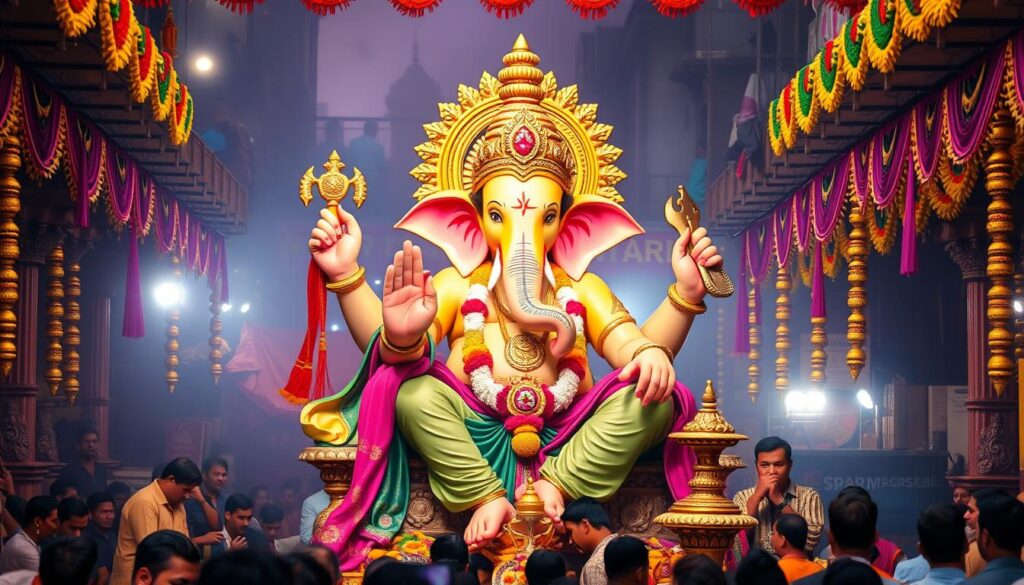
Ganesh Chaturthi, a 10-day celebration, is a testament to the reverence for Lord Ganesha, the remover of obstacles. This festival is observed with great fervor across India, with Maharashtra being the epicenter of its celebration.
The mythology behind Ganesh Chaturthi revolves around the birth of Lord Ganesha. According to legend, Goddess Parvati created Ganesha to guard her while she bathed, and he was later beheaded by Lord Shiva, who then replaced his head with that of an elephant.
The preparations for Ganesh Chaturthi are elaborate, involving the creation of Ganesha idols from eco-friendly materials like clay. These idols are installed in homes and public pandals, accompanied by intricate decorations.
During the 10 days of celebration, devotees perform various religious rituals, including daily aarti and offerings of modak. The festival culminates in the visarjan procession, where idols are carried to water bodies amidst music and dancing.
The grand public celebrations in Maharashtra, particularly in Mumbai, attract thousands of devotees. The streets are filled with the sounds of music and chants of “Ganpati Bappa Morya.”
While the festival is a time for celebration and joy, it also raises environmental concerns due to the immersion of idols in water bodies. Efforts are being made to adopt more eco-friendly practices.
Harvest Festivals Across India
India’s diverse harvest festivals reflect the country’s deep connection to the land and seasonal cycles. These celebrations are an integral part of Indian culture, showcasing the nation’s rich agricultural heritage.
One of the most significant harvest festivals is Pongal, celebrated predominantly in Tamil Nadu. This four-day festival is a time when people express gratitude to the Sun God for a bountiful harvest. The celebration involves cooking a special dish called Pongal, drawing colorful Kolam patterns, and participating in traditional games and cultural performances.
Another notable harvest festival is Bihu, celebrated in Assam. Bihu consists of three festivals: Magh Bihu in January, Bohag Bihu in April, and Kaati Bihu in October. These festivals mark the agricultural cycles and are a vibrant showcase of Assamese culture. People engage in traditional dances, sing folk songs, exchange traditional sweets, and participate in community feasts.

Onam, the harvest festival of Kerala, is a ten-day extravaganza filled with colorful cultural programs. It celebrates the homecoming of the mythical King Mahabali. People decorate their homes with floral carpets (Pookalam), indulge in sumptuous feasts (Onasadya), and participate in snake boat races (Vallamkali) and traditional dance forms like Kaikottikali.
These harvest festivals across India are not just celebrations of agricultural abundance but also reflect the country’s deep-rooted traditions and cultural diversity. They highlight the communal nature of Indian society, where entire villages or communities come together to celebrate, share food, and participate in collective activities and games.
The symbolic elements common to many harvest festivals include bonfires representing the end of winter, colorful decorations symbolizing abundance, and special foods made from newly harvested crops. These festivals preserve traditional knowledge about agriculture, seasonal changes, and sustainable farming practices through their rituals and customs.
In conclusion, India’s harvest festivals are a vibrant expression of the nation’s cultural heritage and agricultural traditions. They are an essential part of the country’s celebration calendar and continue to play a significant role in preserving India’s rich cultural diversity.
Religious Festivals Beyond Hinduism
From Eid to Christmas, and from Gurpurab to Buddha Purnima, India’s religious festivals are a testament to the country’s pluralistic spirit. India’s diverse cultural landscape is home to numerous religious festivals celebrated with fervor across the country.
Eid-Ul-Fitr is cordially celebrated among the Muslim community in India. Each year, Muslims observe fasting for 30 days during the holy month of Ramadan. Eid-Ul-Fitr is celebrated after the fasting at the end of Ramadan, marking a significant day of prayers and feasting. On this occasion, people wear new clothes and offer prayers together. The celebration continues for three consecutive days, with friends and family visiting each other and exchanging gifts.
Gurpurab is another significant festival celebrated by the Sikh community in India, honoring the birth anniversary of Guru Nanak Dev, the first Guru of Sikhism. On this occasion, all Gurudwaras throughout the country are beautifully decorated, and the Sikh community gathers to offer prayers. This is followed by the Langer, a meal prepared and eaten together by the community at the Gurudwara, symbolizing the spirit of unity and faith.
Christmas, one of the most awaited festivals in India and the world, is celebrated with great enthusiasm, particularly in regions with significant Christian populations like Goa, Kerala, and the Northeast. Midnight mass, carol singing, and festive decorations are some of the ways Christmas is observed, making it a special day for people of all ages.
India’s religious festivals contribute to the country’s rich cultural mosaic, often transcending religious boundaries. People of different faiths participate in or acknowledge each other’s celebrations, fostering a sense of harmony and mutual respect across various places in India.
Regional Festivals That Showcase Local Culture
From the snow-capped Himalayas to the Thar Desert, regional festivals in India celebrate the country’s rich cultural diversity. These festivals in India are a testament to the vibrant local cultures and traditions that make the country so unique.
The Jaisalmer Desert Festival is a three-day celebration that showcases Rajasthani culture through folk music, dance performances, camel races, and turban-tying competitions. Visitors can experience the mesmerizing backdrop of the Thar Desert while enjoying traditional delicacies and exploring the local culture.
The Hornbill Festival, held in Nagaland, is a week-long extravaganza that celebrates the rich tribal heritage of Northeast India. This festival showcases the traditional arts, music, dance, and indigenous customs of the various Naga tribes, offering a glimpse into the region’s unique cultural identity.
Other notable regional festivals include the Ladakh Festival, which features traditional music, dance performances, and colorful processions, and the Hemis Festival, known for its masked dances commemorating the birth of Guru Padmasambhava. These events serve as living museums of local traditions, preserving cultural practices and customs that are an integral part of India’s heritage.
These regional festivals, celebrated across different places in India, not only showcase the country’s diverse cultural landscape but also provide a platform for local communities to come together and celebrate their unique traditions.
Modern Festival Tourism in India
As India’s festivals gain international recognition, they are becoming a significant draw for tourists seeking an authentic cultural experience. The country’s vibrant festival scene is now a major attraction for both domestic and international visitors.
The tourism industry has adapted to this trend by offering specialized festival tours, accommodation packages, and guided experiences. These help travelers navigate the complex cultural contexts of Indian festivals.
Local communities benefit economically from festival tourism, with artisans, food vendors, and hospitality workers seeing increased business. Modern technology and social media have also transformed festival experiences, with events being live-streamed and shared globally.
However, balancing authentic cultural experiences with tourist expectations is a challenge. Some regions have developed new festivals or revitalized traditional ones to attract visitors and showcase local culture.
For travelers, experiencing Indian festivals can be a celebration that lasts a lifetime. Planning your visit to coincide with a major festival can make your travel day truly unforgettable, creating memories that last a lifetime in this diverse world and various places.
Experiencing the Spirit of Indian Festivals
The spirit of Indian festivals is a unique blend of tradition, joy, and community. As visitors participate in these vibrant celebrations, they become part of a larger cultural tapestry that is woven with threads of unity and joy. From the festival celebrated with great fervor across the country to the local fairs that dot the landscape, every day is an opportunity to experience the rich cultural heritage of India.
Indian festivals offer a sensory experience like no other, with food playing a central role in the celebration. As people come together to share in the joy and spirit of the occasion, the atmosphere is filled with a sense of unity and togetherness. Whether it’s the colorful decorations, the rhythmic music, or the traditional dances, every aspect of the festival is a reflection of the country’s rich cultural life.
In conclusion, the collective joy and unity experienced during Indian festivals offer valuable lessons in community building and cultural celebration that resonate far beyond India’s borders.